
It started in Vietnam.
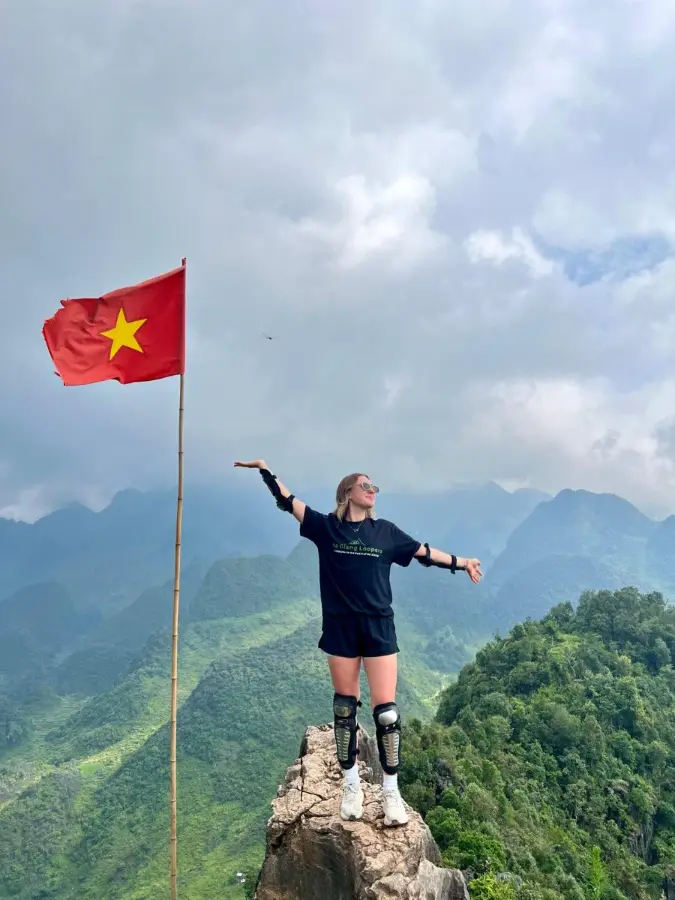
Maayan was traveling for a month, asking ChatGPT and Claude for recommendations at every turn. Everything they suggested felt generic; the same touristy spots, the same lists anyone could find.
She’d given the internet years of her data, trained these models on her behavior, and yet none of them understood what she actually wanted.
This led to the first idea: a travel app. Users would interact with images (think Pinterest) and AI would read them, understand the aesthetic, and generate fully bookable itineraries tailored to that taste.

Marcella, who’d spent a long time working in luxury travel and hospitality management, had seen the same gap from the other side: operators who couldn’t match guests to experiences in any meaningful way. After validating the problem from the operational side, she joined on day 1.
The team grew to three founders and they started building. Then they faced the problem: how does the AI reason and understand the user interactions with the content?
Rishabh, Galya’s CTO, said something that changed everything.
“The problem we are trying to solve isn’t travel. It’s infrastructure.”
He was right. The real issue wasn’t that the travel product was wrong, it was that AI fundamentally can’t reason about what a person likes unless they spell it out explicitly.
You have to prompt it. You have to use words. But taste doesn’t work that way.
The things that tell you the most about what someone wants are the things they don’t say: the images they linger on, the content they engage with, the patterns hiding in their behavior mixed with the insights pulled from the content itself.
That realization became Galya.
We built a taste graph: a system that takes the content users engage with (the images/video/audio/text they save, the listings they click, the things they linger on) and understands them the way humans actually do.
Not by reading keywords, but by reading visuals.
Galya uses vision-language models to extract what an image actually means: the mood, the texture, the aesthetic quality that makes something feel right. Those insights get pulled into a joint embedding architecture, which means we take two very different things, a person and a piece of inventory, and translate them both into the same geometric space.
This means they have the same language and the same coordinates. So when a user’s taste moves in one direction, the right products, places, and experiences move with it (represented by audience clusters).
The result is a taste graph: a living map of who a user is aesthetically, built from behavior rather than self-description.
Not “she said she likes minimalist design,” rather, here are 200 signals that all point in the same direction, and we know exactly where that is on the map.
Most recommendation systems match categories. They’re also built in silos; a travel app knows your travel behavior, a shopping app knows what you buy, a content platform knows what you watch. Each one sees a slice. None of them see your user.
Galya matches meaning across all of it. Taste is cross-domain by nature, so the same aesthetic that draws someone to a particular hotel room shows up in the furniture they save, the outfits they click, the restaurants they linger on.
It’s the same signal, expressed differently depending on the context. We’re built to read that signal wherever it lives and carry it across domains, so every product that plugs into Galya inherits a richer, truer picture of who that user actually is.
That’s the difference.
For B2C products, that means recommendations that finally feel personal. For AI agents, that means reasoning about preference without waiting for the user to explain themselves.
Today, Galya sits underneath AI products and agents as the layer that gives them something to reason off of. Most models are powerful but context-blind. They know how to think, but they don’t know who they’re thinking for.
Galya takes the unstructured signals users leave everywhere and turns them into structured taste context that any model can use. So instead of guessing, or waiting to be told, AI finally has the raw material to get it right.
This isn’t personalization as a feature, it’s personalization as a foundation. Because AI should understand what your users want, even when they don’t say it.




Ready to give your AI taste?
Book a demo and see your first Taste Graph composed live, from cold-start to a callable preference layer.